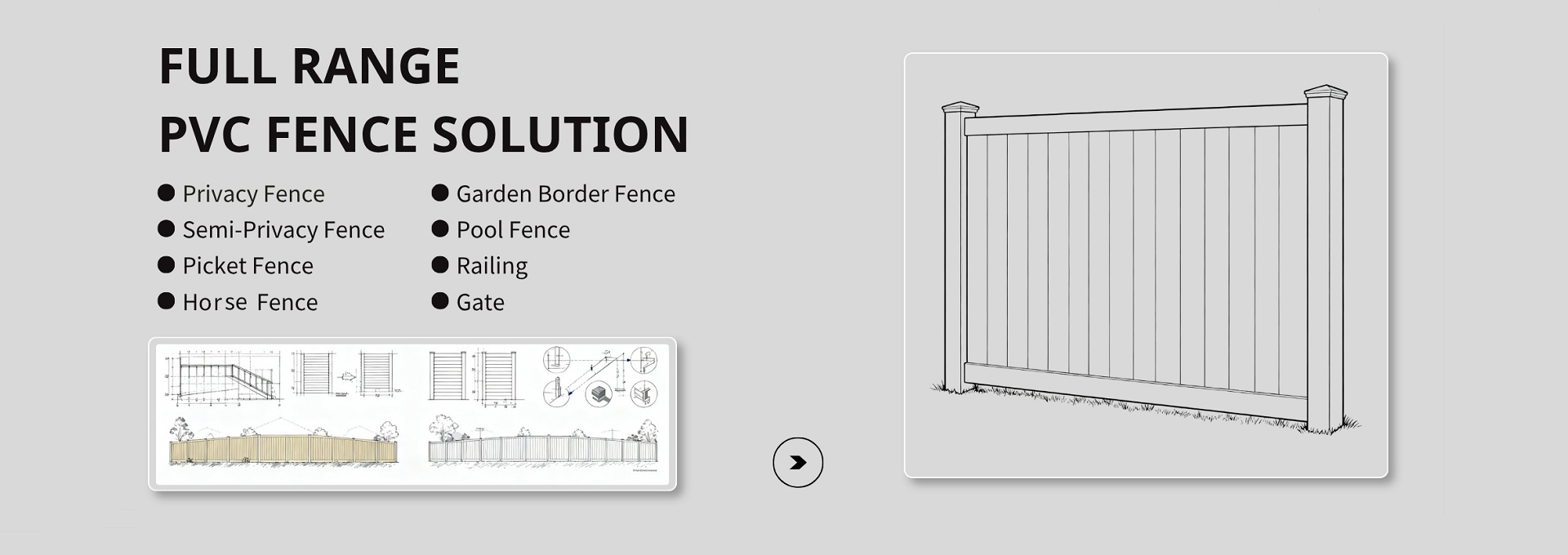
The company website names garden fence and garden border fence among its fence products, and the garden border guide on this site explains the distinction in more detail. A garden fence in this range is a low, decorative boundary that organises a garden: it edges a bed, lines a path, or separates a lawn from a planted area. The pictures for the wider fence range show white panels in garden settings, and the same clean appearance carries into the garden ranges, where the fence is seen at close quarters among plants rather than from a distance across a boundary.
Choosing a garden fence starts with height and openness in the mind, not with a catalogue number. A bed edge needs only to be visible and tidy, while a garden boundary needs to read as a boundary from the house. In both cases the fence will live among soil, water, and trimming work, so the enquiry should ask how the chosen style is fixed at ground level and how it is cleaned, rather than assuming that a panel designed for a tall boundary will suit a low bed edge. Those practical questions are more useful than any general claim about durability, which this site does not make.
Garden fence and garden border fence
The two phrases overlap, and a buyer should not assume they are interchangeable. A garden fence can be a boundary fence for the whole garden, while a garden border fence is more often a lower edge for a bed or a path. The company website names both, and the guide page for garden border fencing sets out the questions that separate them: how high the edge should be, whether it must contain soil or mulch, and whether it will be stepped over or leaned on during gardening work. Answering those questions first prevents ordering a boundary panel for a bed edge, or a bed edge for a boundary.
Appearance matters more in garden fencing than in field fencing, because the fence is part of the garden composition. White is the finish shown in the company pictures, and it reads cleanly against green planting, but a buyer who wants a different colour should ask about availability for the chosen style rather than assuming the full range is offered in every colour. Use the colour options questions to ask about the exact garden style, and request confirmation of the colour you want before planning the rest of the garden around it.
Planning a garden fence order
A garden order is usually smaller than a boundary order, and that has practical consequences. Quantities, panel counts, and the number of corners and ends should be counted from a sketch of the beds and paths, not estimated from the garden area, because a garden has many short runs and each short run needs its own ends. Gates are rarely needed for a bed edge, but a garden boundary may need one, and a gate in a garden should match the fence style so that the entrance does not look like an afterthought. Listing every run, end, and gate in the enquiry gives the supplier a complete picture and avoids a second order for missing parts.
Garden fences through the seasons
A garden fence should be judged through the seasons, not only on the day it is installed, because a garden changes more across a year than almost any other fence setting. Spring planting, summer growth, autumn leaf fall, and winter frost each present the fence differently, and a style that looks clean against bare soil in spring may disappear behind summer growth, while a style that suits summer planting may look stark in winter. A buyer should therefore imagine the fence in each season, with the planting at its fullest and at its barest, before settling on a style and colour.
Seasonal maintenance is the companion to that visual judgement. Leaves, soil, and mulch collect against low garden fencing, and a fence that traps debris at its base will need more cleaning than a fence whose base can be cleared easily. The enquiry should ask how the chosen garden style is fixed at ground level and how its base is cleaned, because those practical points determine whether the fence stays tidy through the year or becomes a maintenance burden that discourages the very gardening it was meant to edge.
Questions to settle in your enquiry
- Is the fence a garden boundary or a bed and path edge?
- Which colour is needed, and is it available for that style?
- How many short runs, ends, and corners does the garden include?